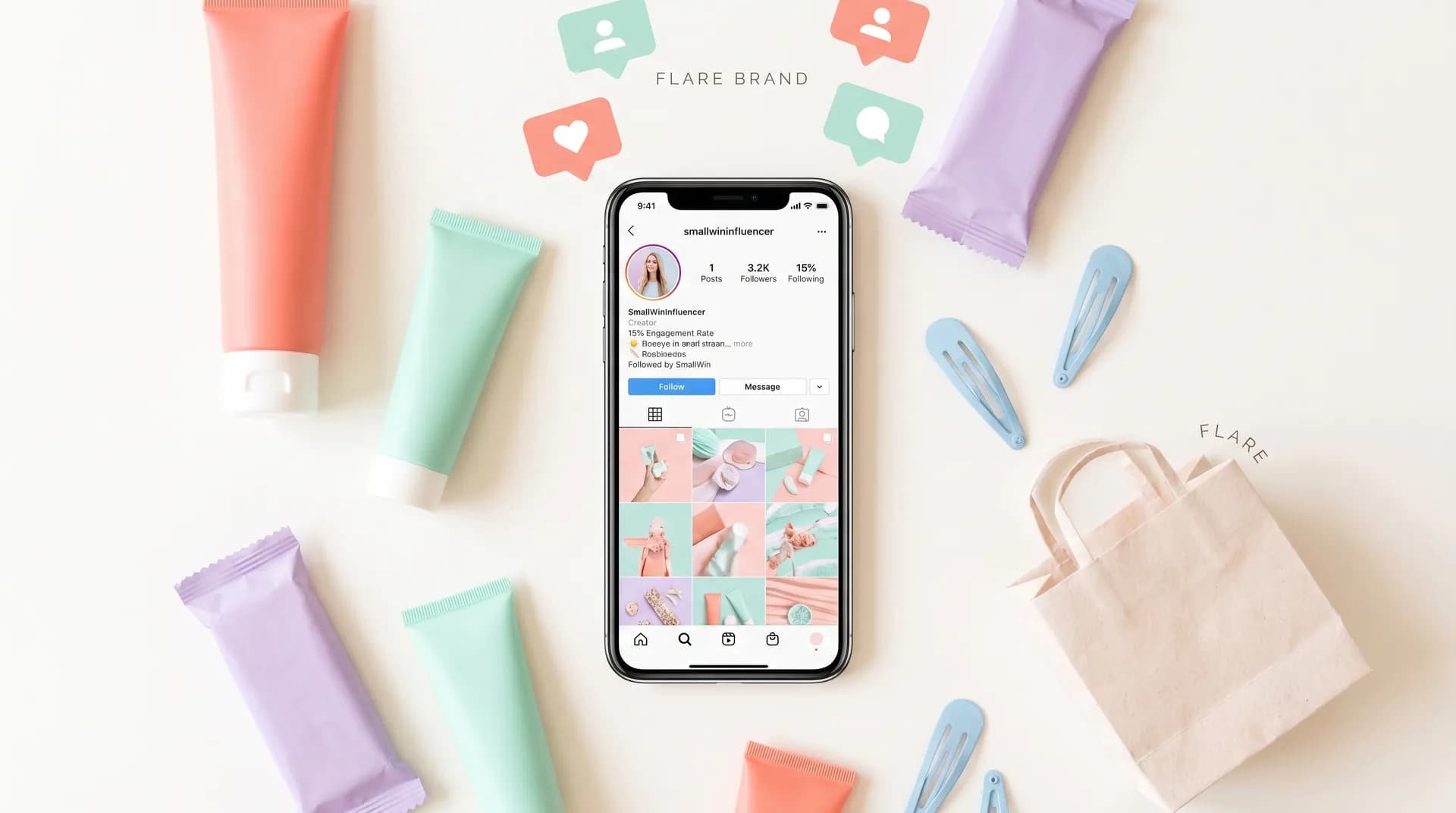
Instagram influencer marketing: how small accounts land paid posts
Under 10k followers on Instagram? Learn the exact profile signals and inbound tactics that get small accounts discovered for paid posts and brand partnerships.

A creator I spoke to last year had 4,200 Instagram followers and was making $800 a month from paid posts. Her friend had 47,000 followers and was making nothing. The difference wasn't audience size. It was how her profile was set up and whether brands could actually find her.
That's what Instagram influencer marketing looks like in 2026 for small accounts — and it's genuinely more accessible than most people think. Follower count stopped being the primary filter brands use a while ago. What they actually scan for now is niche clarity, engagement signals, and whether your profile makes it dead simple to reach you. If you're under 10k followers and you've been waiting to "grow bigger" before pitching brands, you're waiting for the wrong thing.
Here's how to position yourself so brands come to you.
Why instagram influencer marketing works for accounts under 10k
Brands — especially DTC brands spending $5k–$50k a month on influencer content — have largely figured out that a 500k-follower account with a 0.8% engagement rate performs worse than a 6k-follower account with a 9% engagement rate. The math isn't complicated. Smaller audiences are tighter communities. Recommendations land differently.
This is the whole premise behind the shift toward nano and micro creators. If you want the full picture on why brands are actively moving budget down-market, Why brands choose micro & nano social media influencers breaks it down in detail. The short version: trust travels faster in small rooms.
Instagram specifically rewards this dynamic. Reels discovery, niche hashtag traffic, and the Collab feature mean a creator with 4k highly-engaged followers in the sustainable home goods space is actually more valuable to a relevant brand than a lifestyle generalist with 80k passive followers.
The catch is visibility. Brands can't work with you if they can't find you, and they won't reach out if your profile doesn't signal "professional creator" within about three seconds.
The engagement benchmark brands actually use
Most brand managers I've talked to filter at a minimum 3–4% engagement rate before they'll even consider an outreach. For nano accounts (under 10k), industry data from Influencer Marketing Hub consistently shows average engagement rates of 5–8% — which means your small account probably already clears the bar brands care about. You just need to prove it's visible in the data.
Check your engagement rate before anything else. Take your average likes + comments on your last 12 posts, divide by your follower count, multiply by 100. If you're above 4%, you have a real selling point. Put it in your bio or media kit.
Set up your profile like a brand's first impression
Brands don't read bios the way followers do. They're scanning for three things in about 10 seconds: what you make content about, who watches it, and how to work with you. If any of those three things are missing or vague, they move on.
Your name field is SEO real estate. Instagram's search algorithm indexes the name field, not just the username. If you're a fitness creator, your name field should include something like "Fitness & Wellness Creator" or "Home Workouts | [Your Name]." This is how brands using Instagram's native search to find niche creators actually discover accounts. Don't waste it on just your name.
Your bio needs a niche statement, not a personality statement. "Dog mom ☀️ coffee lover ✨" tells a brand nothing. "Pet care content for new dog owners | UGC & brand collabs" tells them everything. One sentence. Niche, audience, and a signal that you're open to partnerships.
Make your contact path frictionless. Add a business email directly in your bio — not just the "Email" button on a Creator account, but the actual address spelled out. Some brands use scraping tools that pull emails from bios directly. A Linktree or direct link to a media kit page dramatically increases conversion once someone lands on your profile.
Story Highlights are your portfolio. Create three to five Highlights labeled by content category: "Skincare," "Kitchen," "Collabs," "Reviews," whatever fits your niche. This signals content consistency over time, even if your actual posts vary. A brand visiting your profile in 2026 will click Highlights before they scroll your feed.
Quick audit: open your own profile on a phone you've never logged into before. Can you tell what niche it's in within 5 seconds? Can you find a way to contact the creator for a collab? If not, that's what's blocking inbound deals — not your follower count.
How brands actually discover small Instagram creators
Here's something most "grow your following" content won't tell you: brands and their agencies often find creators through search tools, not by scrolling feeds. Platforms like AspireIQ, Grin, and Modash let marketers filter creators by niche keyword, engagement rate, audience demographics, and location. Your profile gets pulled into those results based on the keywords in your name field, bio, and caption history.
That means your discoverability is partly an SEO problem, not just a growth problem.
Three tactics that actually move the needle for inbound discovery:
1. Caption keywords, consistently. If you post about home organization, use "home organization," "small space storage," and related terms in your captions — not just hashtags. Search tools index caption text. Do this consistently for 60–90 days and you'll start appearing in niche creator searches you didn't before.
2. Use Instagram's Collab feature strategically. Collabing with another creator in your niche on a single post splits the credit and exposes your profile to their entire audience. More importantly, it signals to Instagram's algorithm that you're active in a specific content category, which improves your placement in niche-specific explore results.
3. Tag brands you already use. Not as a pitch — as content. If you genuinely use a product, make a post about it, tag the brand, and keep the content quality high. A surprising number of first partnerships start as a brand noticing an organic tag. It's not a reliable pipeline, but it's a real one. I've seen creators land $300–$500 gifted-to-paid deals this way within their first three months.
For a complete framework covering outreach, positioning, and the mechanics of the broader micro creator economy, the micro influencer marketing complete 2026 guide is the most thorough resource we have.
What to include in your Instagram media kit
A media kit isn't optional once you start pursuing paid posts. It's the document that moves you from "interesting creator" to "vendor I can invoice." At minimum it needs:
- Your niche and content style in one sentence
- Average engagement rate (calculated, not estimated)
- Audience demographics (age range, top locations, gender split — all visible in Instagram Insights)
- Your rates for feed posts, Reels, and Stories
- Two or three example posts with actual performance stats
- Contact info and payment method
One page. Clean. A Canva PDF works fine. Brands don't care about the design as much as they care about whether the numbers are there.
If you're unsure how to structure or price your services as a creator — separate from influencer posts — our brand ambassador program guide covers the longer-term partnership model that often starts from exactly this kind of initial inbound contact.
The signals that tell brands you're worth the investment
Small account paid posts don't close on follower count. They close on trust signals. Here's what I see brand managers actually checking when they land on a profile:
Post consistency. Posting twice a week for six months straight tells a brand you'll deliver on deadline. Three posts in one week and then silence for a month is a red flag. Brands are buying reliability as much as they're buying reach.
Comment quality on your posts. Brands manually scroll comments. Dozens of "🔥🔥" from obvious bot accounts will kill a deal immediately. Real responses, questions, and conversations in your comment section show that real people are actually watching.
Your response to their DM. I know this sounds obvious, but the speed and professionalism of your first reply sets the tone for the entire partnership. A creator who replies within 24 hours with a media kit link and clear rate structure will close deals that a creator who replies three days later with "omg yes what were you thinking??" will never land. According to a Mavrck study, brands report response time as one of their top five factors in selecting a creator.
Whether you've worked with brands before. Brands prefer to not be your first. If you haven't done a paid collab yet, lead with gifted content you've created. Even unpaid, it demonstrates you know how to make on-brief, professional content — which matters more than the payment history. Understanding what brands want when they brief a creator is part of that professionalism signal.
The creator economy isn't shrinking — it's just filtering. Brands are getting sharper about who they work with, and the creators winning small-account deals in 2026 are the ones who've made their profiles into a pitch that runs 24/7 while they sleep. Fix your bio, lock in your niche keyword, build your Highlights, and put your engagement rate somewhere visible. The inbound deals follow the infrastructure.