TikTok UGC video length: what actually performs in 2025
Not all TikTok UGC lengths are equal. Here's what 7, 15, 30, and 60-second formats actually do for performance — and when brands request each.

A brand DM'd me last week asking why their 60-second UGC testimonials were tanking on TikTok Ads while their 15-second hook-and-demo clips were printing a 3.2x ROAS. They thought the problem was the script. It wasn't. It was the tiktok ugc video length.
Duration is one of those variables that sounds boring until you realize it's quietly killing — or saving — your ad spend. I've seen creators deliver beautifully shot, tightly scripted videos that get rejected at the brief stage purely because they clocked in at 52 seconds when the brand needed 27. And I've seen scrappy 9-second clips outperform $10k production budgets.
Here's what I actually know about how length works across different TikTok UGC use cases.
Why TikTok UGC video length matters more than most creators think
TikTok's feed is a machine that rewards retention. Every second a viewer keeps watching is a positive signal. Every swipe away is a penalty. That means the relationship between your video's runtime and your retention curve isn't just an aesthetic choice — it's directly tied to how TikTok's algorithm surfaces UGC for organic reach.
Brands running paid ads care about this too, but for a different reason. TikTok's own ad specs have sweet spots. Videos between 21–34 seconds consistently outperform both shorter and longer formats in TikTok's published creative best practices. But that's a broad average across all content types. UGC has its own rhythm.
The other thing most creators miss: the length a brand requests in a brief is almost always tied to where that video will run. Spark Ads, In-Feed Ads, TikTok Shop product pages, and organic brand accounts all have different optimal durations. When you understand the "why" behind the request, you can actually push back intelligently — or deliver something better than what they asked for.
When a brand brief specifies a video length, ask one question before you script: "Is this for paid ads, organic posting, or TikTok Shop?" The answer changes everything about how you structure the content.
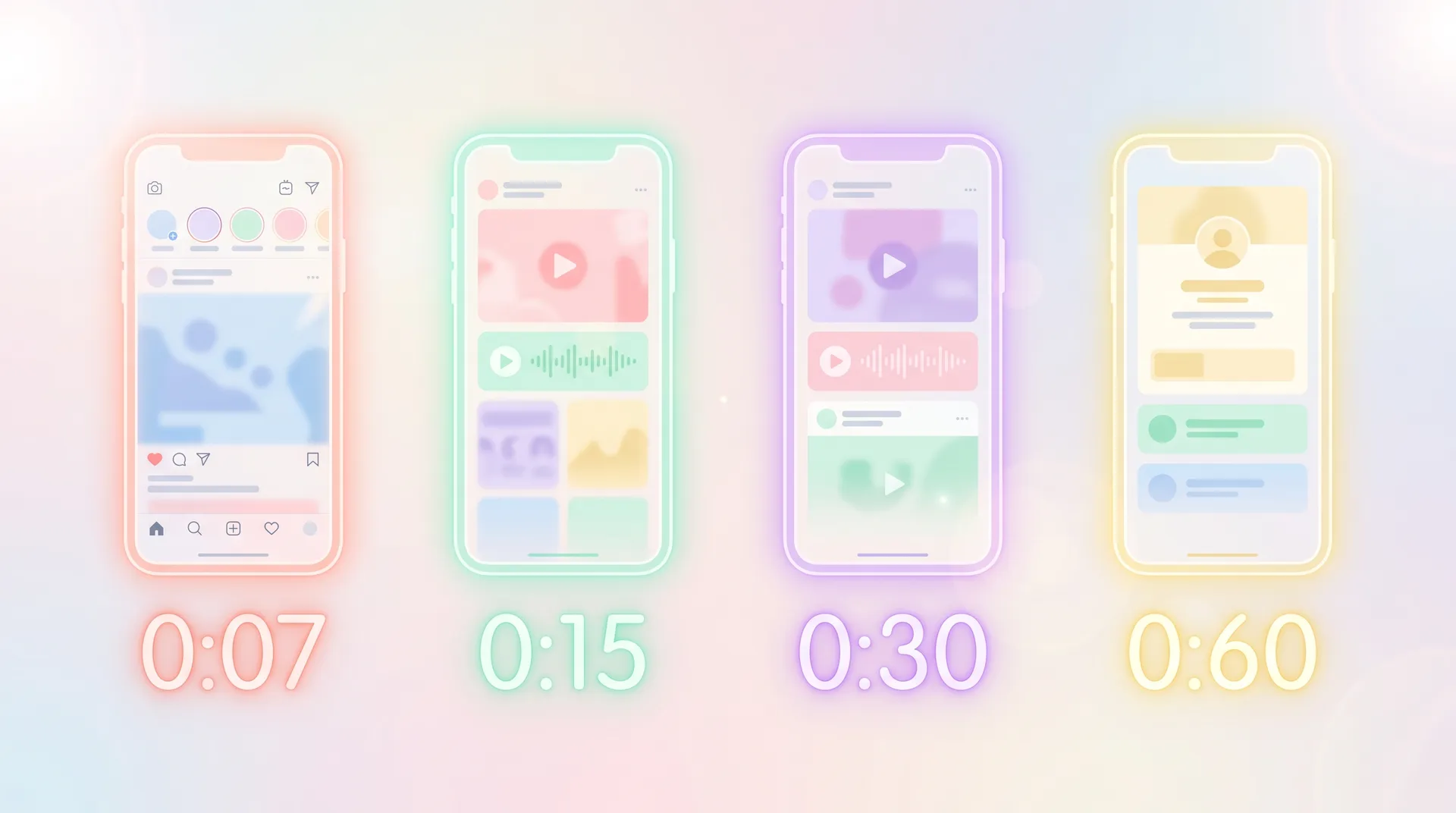
The 4 main TikTok UGC length formats — and what each one is actually for
7–10 seconds: the scroll-stopper
Seven seconds sounds like nothing. It basically is nothing — and that's the point.
This format exists almost entirely for retargeting ads and top-of-funnel awareness where the brand just needs to interrupt the scroll, plant a brand impression, or drive a click. You're not telling a story. You're throwing a visual hook + a single punchy claim at someone and getting out.
A 7-second clip might be: product in hand, one sentence of social proof, text overlay with a CTA. Done.
Brands in beauty and CPG use this format a lot. I've seen skincare brands request batches of 8–12 of these at once to run A/B tests on hooks. The creative work here is almost entirely in the first 3 seconds of the hook — if you don't grab them immediately, the ad is toast.
As a creator, don't undercharge for these just because they're short. A tight 7-second script that actually converts is harder to write than a 30-second one.
15 seconds: the workhorse format
This is the most commonly requested UGC length in the briefs I see, and it's the one I'd tell any new creator to master first.
Fifteen seconds is enough room to run a compressed problem-agitate-solution arc. Hook (0–3s), problem or context (3–8s), solution/product reveal (8–13s), CTA (13–15s). That structure maps cleanly to what we cover in the Problem-Agitate-Solve framework for UGC scripting — just compressed aggressively.
TikTok's own research suggests 15-second ads achieve strong completion rates precisely because they match user expectations for short-form content. Viewers don't feel like they're committing to anything.
Brands love this format for mid-funnel paid ads. It's short enough to hold attention, long enough to communicate a clear value prop, and it performs consistently across most verticals — supplements, apps, fashion, home goods.
30 seconds: the story format
This is where you get to actually build something. A proper before/after. A mini unboxing with reaction. A use-case walkthrough with enough context that the viewer understands why this product matters for someone like them.
Thirty seconds is what brands request when they want authentic storytelling over punchy claims. Think DTC brands with a higher consideration purchase — skincare routines, fitness equipment, subscription boxes. The audience needs a bit more convincing before they click.
The trap with 30-second UGC is pacing. I see creators fill this runtime with filler — unnecessary pauses, repeated points, overly long product-in-hand shots that just sit there. Every single second needs to carry weight. If you're at 28 seconds and you've said what you needed to say, cut it to 28 seconds. Don't pad.
One more thing: a 30-second video that drops retention after the 10-second mark is performing like a 10-second video anyway. Watch time and retention matter more than runtime. Brand managers looking at their TikTok Ads dashboards can see exactly when viewers are dropping off.
60 seconds: the deep-dive
The 60-second format is specific and situational. Use it wrong and you're wasting everyone's time.
When does it work? Tutorial content. Multi-step demonstrations. Comparative reviews where the viewer actually wants detail. TikTok Shop product pages where someone is already in buying mode and wants to see the product used properly.
When does it fail? As a cold-traffic In-Feed Ad for almost anything. People don't watch 60-second ad content from strangers. If a brand asks for this format for paid cold traffic, I'd push back and ask if they've tested a shorter cut first.
The exception is TikTok's longer-form push. TikTok has been actively encouraging creators to post videos over 60 seconds for organic reach, rewarding longer watch sessions algorithmically. But that's organic content strategy — different goal, different rules.
What brands actually ask for (and why)
Here's the pattern I've noticed across hundreds of UGC briefs:
Beauty & skincare: Mostly 15–30 seconds. Enough time to show transformation or application without over-explaining.
Apps & SaaS: 15 seconds for paid social, sometimes 30 for screen-share walkthroughs. They're fighting short attention spans more than most verticals.
Food & beverage: 7–15 seconds for CPG. Reaction hooks, taste moments, simple visuals.
Fitness & supplements: 30–60 seconds. This audience is used to consuming educational content and wants proof before they spend $60 on a protein powder.
E-commerce / fashion: 15 seconds for ads, but brands increasingly request multiple lengths from the same shoot so they can test formats against each other.
That last point is worth doubling down on. Smart brands don't pick one length — they ask for a 15 and a 30 from the same creator at the same time and run them head-to-head. If you're not already offering this as a package, start now. It increases your per-deal value without much extra production work.
Offer length variants as a standard package add-on. A 15-second and a 30-second cut from the same shoot costs you maybe 20 extra minutes in editing and can add $75–$150 to your rate. Brands love having options to test.
How length interacts with ad placement
This is where it gets more technical, but it matters if you want to sound like you know what you're talking about on a brand call.
TikTok In-Feed Ads can run up to 60 seconds, but the algorithm penalizes long videos that hemorrhage viewers early. TopView Ads (the ones that appear the instant you open the app) max out at 60 seconds, but TikTok's own guidance recommends 5–15 seconds to maximize impact.
Spark Ads — where brands boost your organic content — are less length-sensitive because the content already has organic proof of concept. If a 45-second creator video is performing organically, boosting it as a Spark Ad can work even at that length.
TikTok Shop videos and product showcase content? Longer tends to work better there. Buyers want to see the product in use. A 45–60 second honest review on a Shop product page converts better than a snappy 15-second clip, because the purchase intent is already there.
For more on how all of this fits into your broader TikTok strategy as a creator, the TikTok UGC complete platform playbook covers ad formats, organic strategy, and how brands think about the platform in one place. Worth bookmarking.
The honest answer to "what length should I use?"
There's no universal right answer — but there's a decision framework.
Start with the placement. Then match the awareness stage. Then fit your script. In that order.
Cold traffic In-Feed Ad → 15 seconds, maybe 21. Retargeting → 7–10 seconds. Organic brand account → 30–45 seconds. TikTok Shop → 45–60 seconds. Spark Ads → whatever the organic video already is.
What I'd tell any creator just starting out: master the 15-second format before anything else. It's the most versatile, the most commonly requested, and the hardest to do well. Once you can consistently nail a 15-second hook-to-CTA arc, you'll have no trouble scaling up or down.
And if you want to understand how length decisions connect to everything else you're doing on TikTok — including how the platform differences between TikTok, Reels, and Shorts affect your creative approach — those platform-specific nuances are worth understanding before you pick up your phone for your next shoot.